Stop telling your child the same thing 20 times.
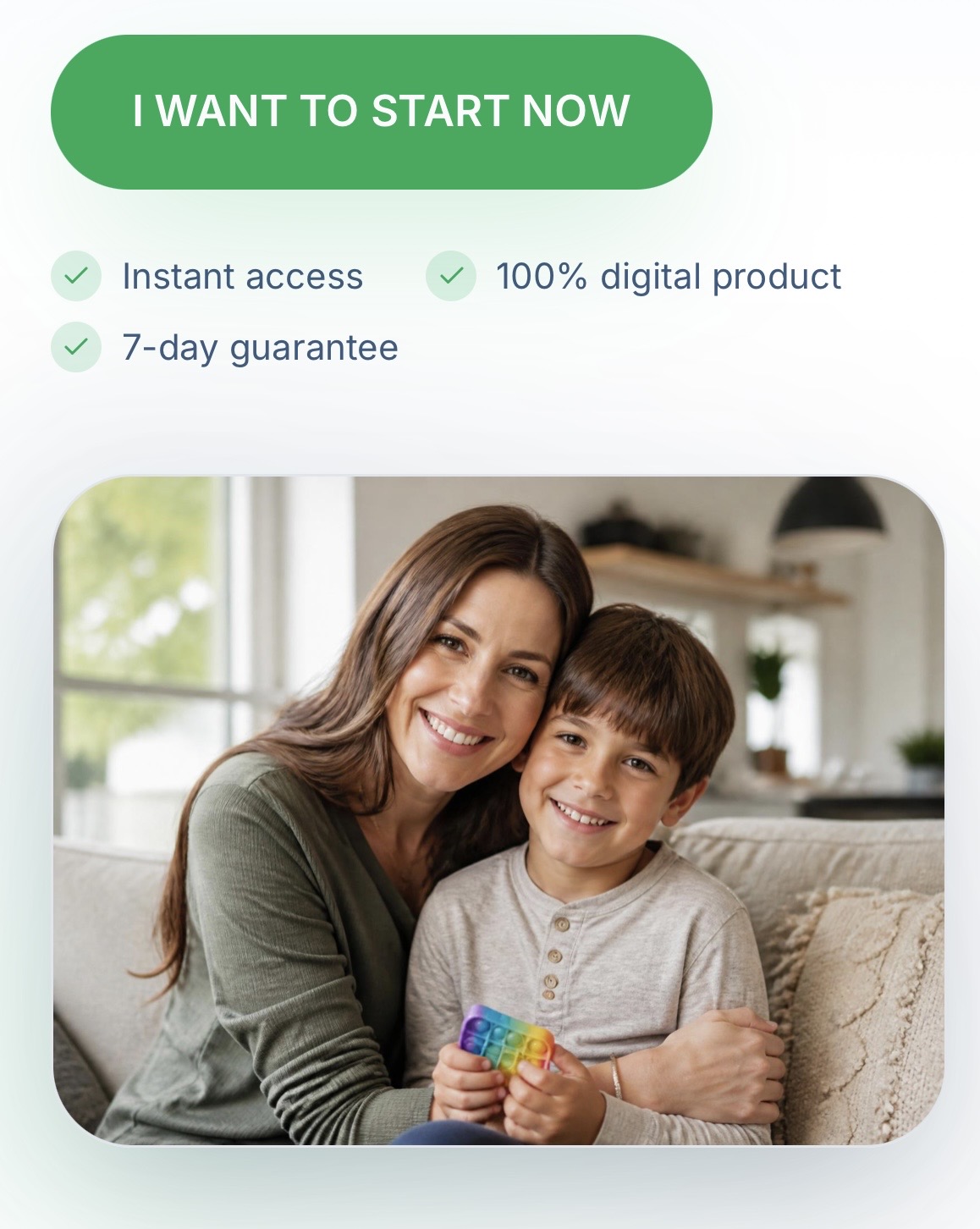
Practical tools to help your child with ADHD follow daily routines with fewer reminders, fewer arguments, and more independence.
You repeat it again and again.
But your child still struggles to start, remember, organize, or finish the task.
"Get dressed."
The clothes are right there, but getting started still feels impossible.
"Brush your teeth."
You said it two minutes ago. Now you are saying it again.
"Pack your backpack."
One missing step turns the morning into another last-minute scramble.
"Start your homework."
They know it needs to be done, but organizing and beginning the task becomes a battle.
"Get ready for bed."
By the end of the day, you are both exhausted from reminders and arguments.
Your child may know what to do, but ADHD can make it difficult to start, organize, remember, and follow through.
Your child doesn't need more reminders. They need to see the next step.
Access, print, cut, and use these tools at home to replace constant verbal reminders with a simple structure your child can follow.
Visual routines
Let the routine do the reminding
Clear morning, after-school and bedtime sequences your child can see and follow one step at a time.
Checklists & cards
Make the next step visible
Print, cut and place simple checklists and routine cards where your child needs them most.
Transition tools
Move from one task to the next
Use predictable cues and small steps to make stopping, starting and switching tasks feel less overwhelming.
Parent support scripts
Know what to say without starting a fight
Use supportive words that reduce pressure, guide your child back to the task and protect your connection.
Independence-building resources
Break everyday responsibilities into small, visible steps your child can begin and finish.
Less repeating. More connection.
Less arguing. More structure. Small, supported steps toward real independence.

Same child. Different house.
- He checks the list instead of waiting for you to ask
- Homework starts without a 40-minute battle
- A meltdown becomes a 3-minute reset
- You correct less and connect more
- He starts believing he can do hard things

Six years as an ADHD mom. Built on executive-function research.
Every tool inside follows one principle from the executive-function research of Dr. Russell Barkley: children with ADHD don't have a knowing problem, they have a doing problem. So we stop explaining harder — and start putting the plan where the child can see it.
Cross-checked with guidance from the AAP, CDC, NIMH and CHADD. Nothing here contradicts your child's doctor.
See all sources & referencesPrint it. Cut it. Use it at home.
Put a visual routine on the fridge, keep routine cards near the task, and give your child a checklist they can follow without waiting for another reminder.
- Visual routines and printable checklists
- Routine cards and transition tools
- Parent scripts and independence resources
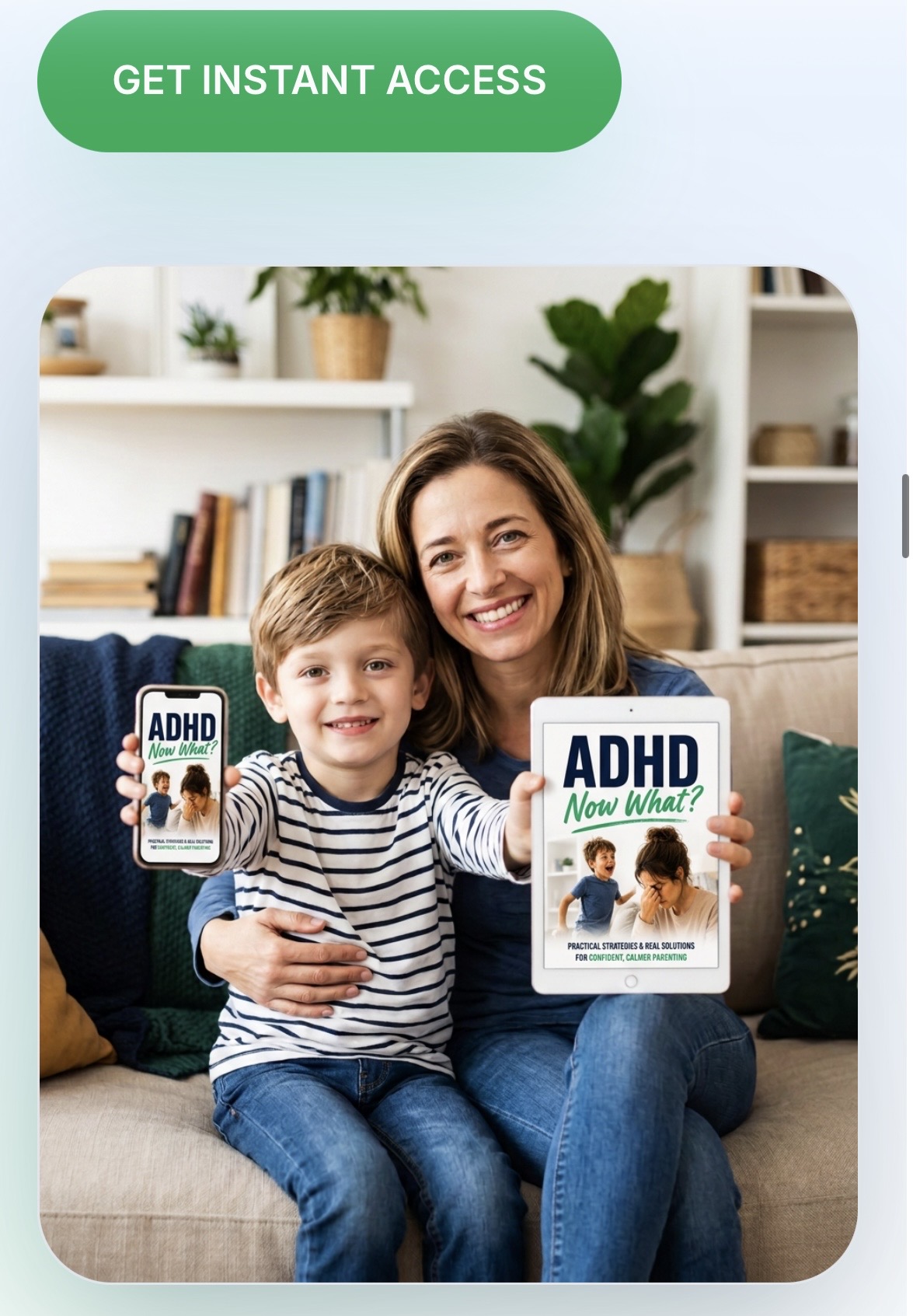
Everything you'll receive today.
Three focused materials to help you understand the challenge, support everyday needs, and build more predictable routines.
My Child Has ADHD, Now What?
Practical guidance for parents who want to understand ADHD and respond with more clarity.
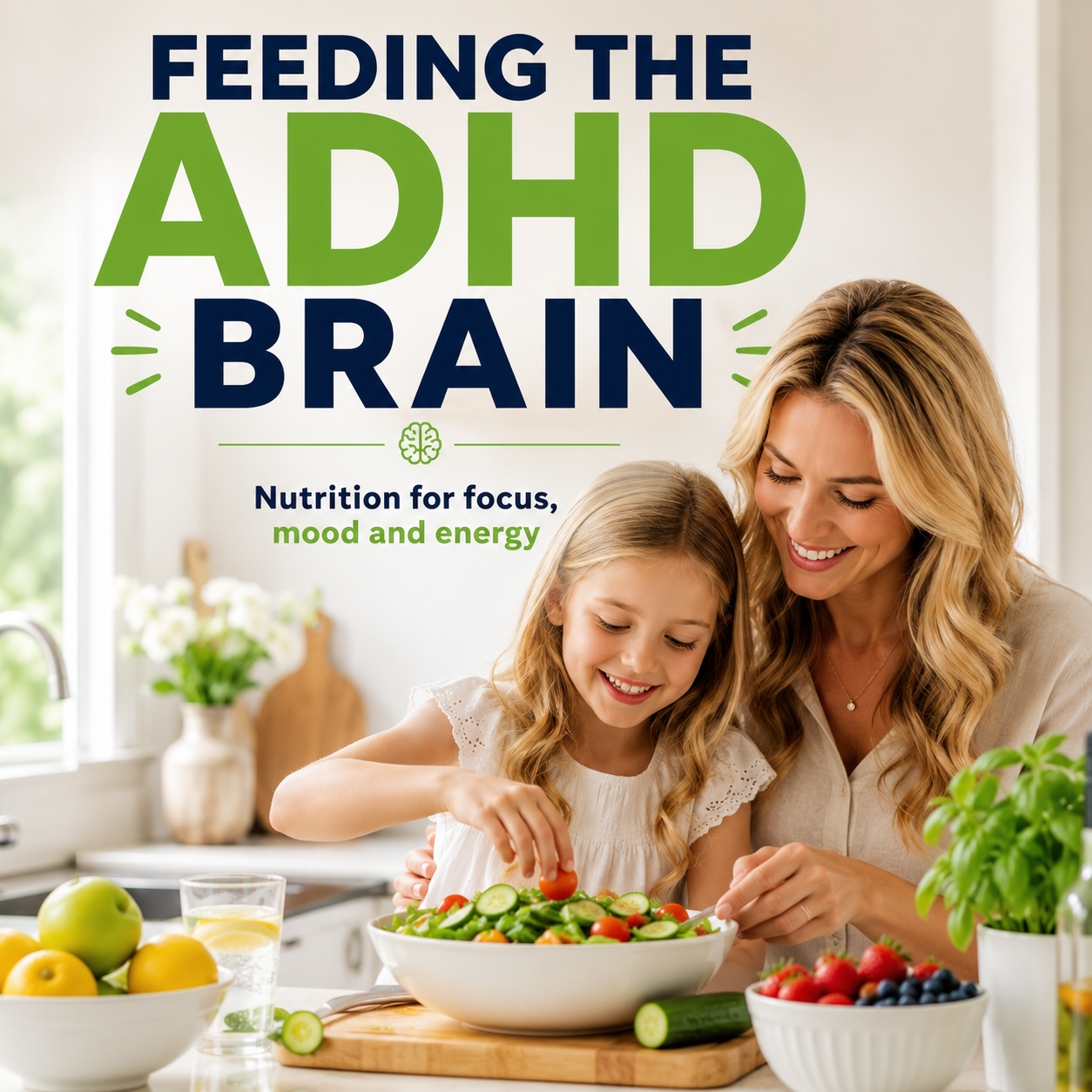
Feeding the ADHD Brain
Nutrition guidance and supportive eating routines for everyday family life.

Peaceful Nights, Restful Mornings
Calmer, more predictable bedtime and morning routines.
4 powerful bonuses — included today.
Each bonus is designed to make your day-to-day with ADHD easier, calmer and more joyful.
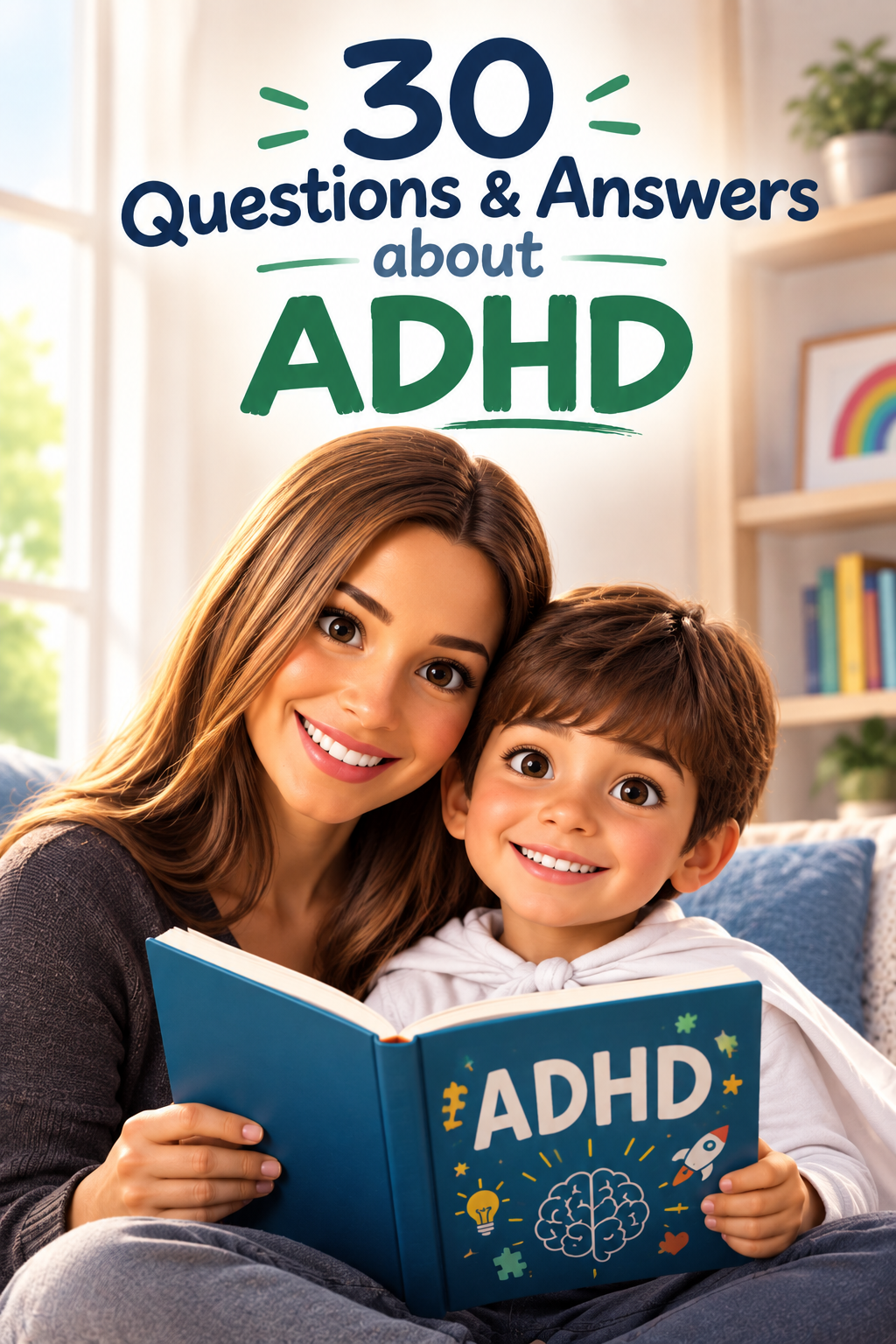 BONUS 1
30 Questions & Answers about ADHD
The questions that keep you awake — answered clearly, without jargon.
 BONUS 2
Tools to Parent with Love
Printable checklists, routine planners, behavior trackers and school-support templates.
 BONUS 3
Hope for the Future
What the research says about ADHD kids growing into capable, independent adults.
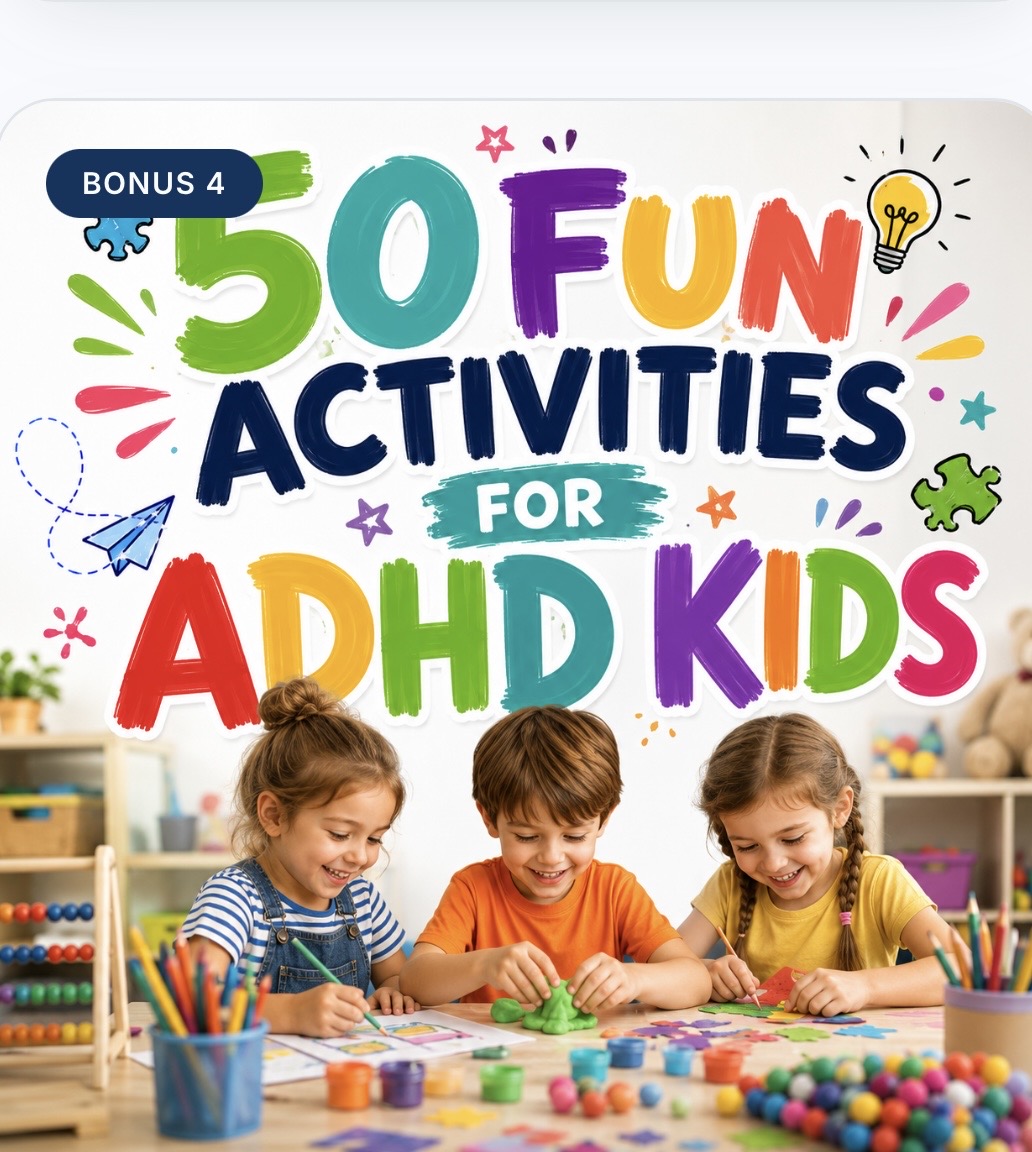 BONUS 4
50 Fun Activities for ADHD Kids
Short, doable activities that train focus and self-control while feeling like play.
Your bonuses — or swipe with your finger
BONUS 1BONUS 2BONUS 3BONUS 4BONUS 1BONUS 2BONUS 3BONUS 4Who this is for
- Moms who just received the diagnosis
- Moms exhausted from repeating themselves all day
- Families who want fewer fights and calmer evenings
- Parents whose child is starting to lose confidence
- Anyone who wants tools, not more theory
Who this is not for
- • Not a replacement for a pediatrician or psychiatrist
- • Not for anyone seeking a "cure" or an overnight fix
- • Not medication advice of any kind
Checked against the mainstream science
Not internet advice. Built on published research and clinical guidance.
These institutions don't endorse or sponsor this toolkit — their publicly available guidance is what every strategy inside was cross-checked against. See the full reference list
Who this toolkit is for.
- You feel exhausted, confused or guilty at the end of most days
- Your child has meltdowns over things that seem small
- You want more peace and connection, not more consequences
- You've tried everything and nothing has stuck
- You want practical steps you can use tonight — no theory dumps
- ×You're looking for a dense academic or clinical textbook
- ×You believe ADHD is just an excuse for bad behavior
- ×You want a medication protocol instead of parenting tools
- ×You're not willing to change one small part of your routine
Everything you get today — for a fraction of the price.
Available for the next 24 hours only — then the price goes back up
Today you're not going to pay the full $195
You're not even going to pay $97
Not even $47
Launch promo price — today only
One-time payment · No subscription
Launch price ends in — only 24 hours:
Unconditional 7-day money-back guarantee
Try the routines for a week. If your home doesn't feel calmer, request a full refund per the platform's policy — no questions asked.
Before helping other mothers, I was also the mother who didn't know what to do.
I know the guilt, the exhaustion, and that feeling of deeply loving your child while not knowing how to truly help them.
While searching for answers, I began a journey of studying, researching, and learning from specialists in child development and ADHD.
And the more I learned, the clearer one thing became:
My child didn't need a perfect mother. He needed a mother who understood him.
That's when I realized that everything I was learning could become something much bigger: helping other mothers find clarity, confidence, and connection with their children.
That's how this project was born — from the desire to transform an experience that once made me search for answers into practical tools that can make another mother's journey a little lighter.
Because no mother should ever have to choose between loving her child and knowing how to help them. ❤️
Sarah Meireles
Moms across America are already breathing easier.
"The visual morning routine ended the daily fight in three days. He follows the list instead of waiting for me to nag."

"I stopped being his memory. That sentence alone changed how I parent — and how much I yell."

"The calm-down plan works. What used to be a 45-minute meltdown is now a few minutes and a hug."

"I wish I'd had this the day we got the diagnosis. It would have saved me months of tears and Google rabbit holes."

"He told me last week, 'I'm good at finishing things now.' I cried in the kitchen."

"Practical, gentle, no shaming. It reads like a friend who's actually lived this, because she has."
You don't have to be your child's brain all day.
Start with one routine. One step. One small change.
- Instant access
- Printable + digital
- 7-day guarantee
Frequently asked questions
Do I get access immediately?
Yes. As soon as your payment is confirmed you receive an email with your instant access link to every guide and bonus.
Will this work if my child refuses every system I try?
That's usually a sign the steps were too big or invisible. The routines here are built in very small, visible steps — and there's a whole section on introducing them without a power struggle.
Does it work for a brand-new diagnosis?
Absolutely. It was written for the mom who just left the appointment with a diagnosis and no plan for Monday morning.
Is it only for young children, or also teens?
The core principles apply to children, tweens and teens. Age adaptations are covered throughout the material.
Who wrote it, and based on what?
A mom with six years of daily ADHD parenting, using the executive-function framework of Dr. Russell Barkley plus guidance from the AAP, CDC, NIMH and CHADD. All sources are listed on the references page.
Does this replace my child's doctor or therapist?
No. This material complements — it does not replace — professional care, and it never gives medication advice.
Instant access · 7-day guarantee · 100% digital